
GAME & MEDIA TECHNOLOGY (MSC PROJECTS)
Face Detector
Face detection using machine learning.
Overview
A face detection system consisting of two core components: a classifier and a detector. The classifier is trained on positive and negative images by extracting their Histogram of Oriented Gradients features (HOG) and using a Support Vector Machine (SVM). The detector takes a test image and detects faces in multiple scales (pyramid images), then applies non-maximum suppression to remove overlapping detections. The system achieved an F1-score of 0.875 on human face detection.
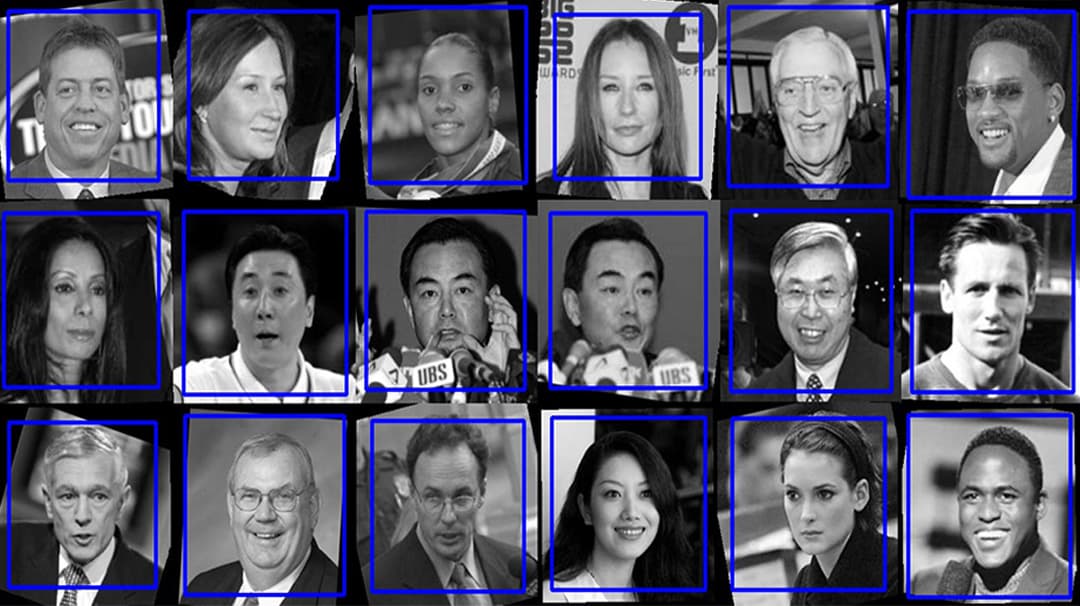
Celebrity Face Detection
Example detections on celebrity test images, with bounding boxes drawn around detected faces.
Evaluation & Results
The classifier was trained on positive samples (human faces) and negative samples (non-face images). The detector was evaluated using images of celebrity faces and consistently identified faces by drawing bounding boxes around the detected regions. The system was also tested on negative examples such as animal faces (primarily cats and apes), which were not classified as human faces — the expected outcome given the training data. Overall, the detector achieved an F1-score of 0.875 on human face detection tasks and performed best on frontal adult faces.
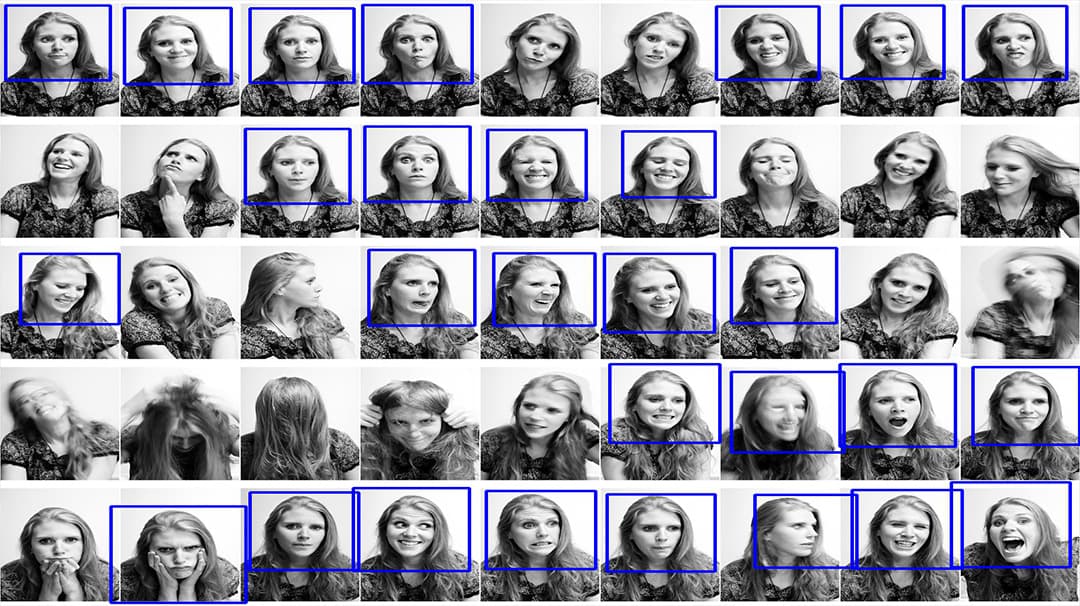
Face Detection Across Expressions and Poses
Detection results on a single subject across varied facial expressions, head orientations, and partial motion blur.
Limitations & Observations
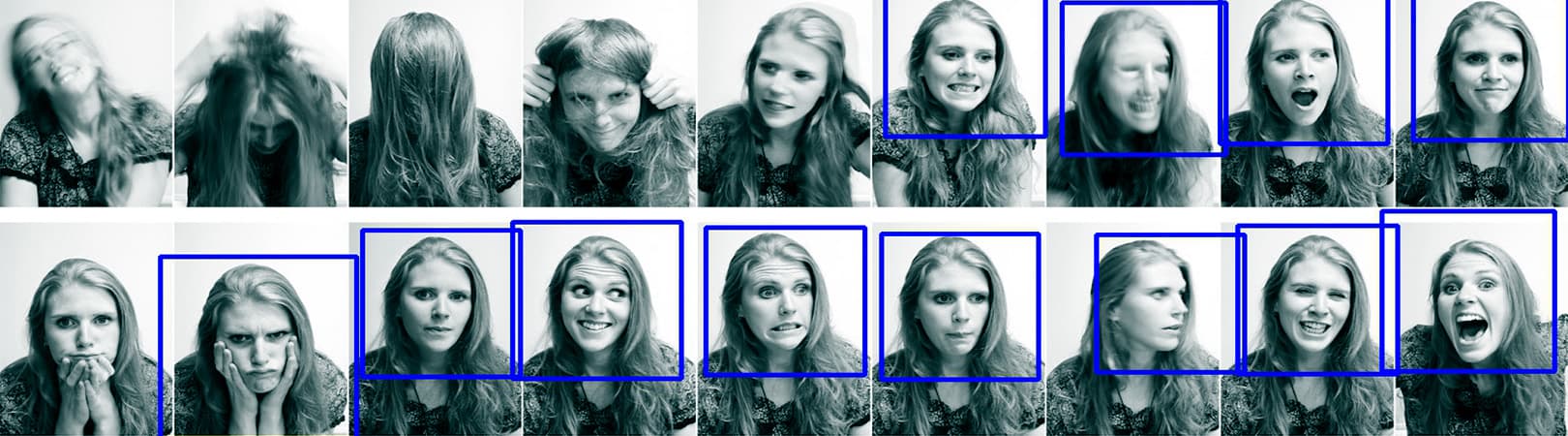
The detector struggled in certain scenarios, particularly when faces were tilted, partially occluded (e.g., covered by hands), or when images were blurry. It was also less effective at detecting baby faces, likely due to differences in facial proportions and the adult-focused training data.